Does Insurance Go Up After an Accident? At-Fault Surcharges and State Limits
Does insurance go up after an accident? Usually if you were at fault. How surcharges work, where states limit them for not-at-fault crashes, and what to do.
How this guide was checked
This guide was written from the sources listed below, and Atif M., Arhox's editor, is responsible for it and corrects errors readers report. A dated line-by-line check against those sources is recorded here once the editor has completed one.
Drafting is assisted by AI tools. It has not been reviewed by an attorney or a licensed insurance professional. Read our editorial standards, or report a problem.
Sources (8)
- New York DFSdfs.ny.gov · Auto resource center
- Texas Department of Insurance glossarytdi.texas.gov · auto insurance glossary
- New York DFS FAQsdfs.ny.gov · automobile
- TDItdi.texas.gov · will my premium go up claim
- TDI auto guidetdi.texas.gov · cb020
- Pennsylvania Insurance Departmentprnewswire.com · pennsylvania insurance department warns drivers of peak deer crash season advises consumers they cannot be surcharged for deer related accidents
- State insurance department'scontent.naic.org · state insurance departments
- DFSdfs.ny.gov · complaint
In this guide
Usually, if you caused it. Insurers add a surcharge at renewal for at-fault accidents, and New York’s insurance regulator says that under many rating plans a first at-fault accident “could result in a surcharge of up to 40% of your premium” (New York DFS). If the crash was not your fault, the answer depends heavily on your state. Some states bar surcharges for not-at-fault accidents, while others let insurers weigh almost any claim.
The short version:
- An at-fault accident usually raises your premium at the next renewal, often for about three years.
- You can also lose a claims-free or safe-driver discount, which is a rate increase in all but name.
- New York bars surcharges when you were not at fault or your car was legally parked, and Pennsylvania bars them for deer and other animal crashes.
- Comprehensive claims, such as hail, theft or vandalism, are treated differently from crashes, though some states still let them affect your price.
- Accident forgiveness can waive the surcharge on a first accident, but the accident still shows up in your records.
This is general information, not insurance or legal advice. Policies differ by insurer and state, so your own policy wording decides the claim.
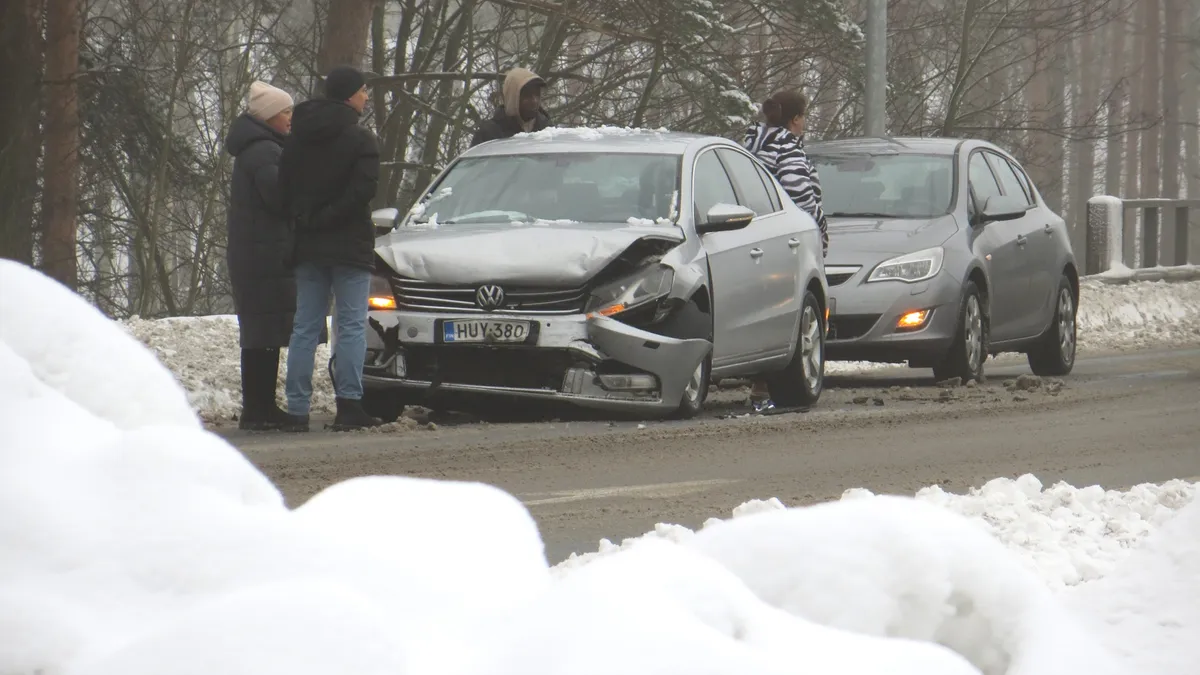
How an accident surcharge works
A surcharge is “an extra charge added to your premium by an insurance company” (Texas Department of Insurance glossary). It is applied when your policy renews, not mid-term, and it stays on for a set period under the insurer’s rating plan.
New York publishes more detail than most states. There, surcharges apply to “accidents involving bodily injury, or losses to property in excess of $2,000, where the insured driver is at fault,” and the regulator notes that the surcharge is the same “regardless if the damages were (for example) $3,000 or $50,000.” Two or more accidents or minor convictions within a window of “approximately 3 years” can also trigger one (New York DFS FAQs). New York also limits the damage: surcharges apply only to liability, no-fault and collision premiums, and “no policy can be surcharged to a level where the premium exceeds more than three times the base premium” (New York DFS).
Say your annual premium is $1,800, and $1,400 of that is liability, no-fault and collision. A 40% surcharge on that portion adds $560, taking you to about $2,360 a year. If you also lose a claims-free discount, the jump is larger. Texas warns that “you could also lose any discounts you’re getting for being claim free” (TDI).
At fault or not: what usually happens
Fault is the hinge. Sources: New York DFS; TDI; TDI auto guide; Pennsylvania Insurance Department.
| Situation | Can your rate go up? | Notes |
|---|---|---|
| You caused the crash | Usually yes | Surcharge plus any lost discount |
| The other driver was at fault | Often no; barred in New York | Claim against their insurer where you can |
| You were rear-ended with no ticket against you | Generally no in New York | Keep the police report |
| Your parked car was hit | No in New York | Note the location and photos |
| You hit a deer or other animal | Barred in Pennsylvania; Texas insurers cannot nonrenew for it | Usually a comprehensive claim |
| Hail, theft or vandalism claim | Not surcharged in New York; may still affect price in states like Texas | Lost claims-free discounts are the usual effect |
| The insurer denied or did not pay the claim | No in Texas | Asking your agent questions does not count either |
| Fault was shared | Depends on the insurer’s rating plan and state rules | Ask how fault was assigned |
The deer row is one of the clearest state rules. The Pennsylvania Insurance Department has said a crash with a deer “is considered a not-at-fault accident” and “surcharges are prohibited for accidents with animals or fowl.” Our guide on hitting a deer covers that claim in detail.
How state rules differ
There is no national rule. Each state’s insurance department approves rating plans and sets its own limits, and the three examples above show the range.
New York spells out when a surcharge is allowed and when it is not. Beyond the not-at-fault and parked-car protections, the $2,000 threshold means a single small fender-bender with no injuries generally does not qualify (New York DFS).
Texas gives insurers more room on price. Its regulator says auto companies “can raise your premium if you’ve had accidents or gotten traffic tickets,” and that home and auto insurers “can raise your premium for filing most types of claims” (TDI). Texas does protect you from losing the policy over some claims. An insurer cannot nonrenew you for weather damage, hitting an animal, or “accidents or incidents that can’t reasonably be blamed on you, unless you have more than one of these claims in 12 months” (TDI auto guide).
Pennsylvania prohibits surcharges for animal crashes, as noted above.
For other states, look up the rules on your state insurance department’s website, or ask your insurer to show you the surcharge schedule in its filed rating plan.
Disputing an at-fault finding
Insurers decide fault for rating purposes themselves, and they can get it wrong. If your renewal shows a surcharge you think is unfair:
- Ask your insurer in writing which accident it surcharged, who decided you were at fault, and on what basis.
- Send evidence: the police report, photos, dashcam footage, witness statements, and any letter from the other driver’s insurer accepting liability.
- Point to your state’s rule if it bars the surcharge, such as New York’s protection when you were legally parked or not at fault.
- Complain to your state insurance department if the insurer will not reconsider. New York takes complaints through DFS, and every state has a similar process.
Where both drivers share blame, how much each was at fault can matter for the injury claim as well as your premium. See comparative negligence for how states split fault.
Accident forgiveness
Accident forgiveness is a feature some insurers sell or give as a loyalty reward. The insurer agrees not to apply a surcharge for your first at-fault accident. Three points to check before you count on it:
- It is the insurer’s promise, not a state rule. Terms, eligibility and availability vary by company and state.
- The accident still exists. It appears in your claims history and possibly your driving record. Texas notes that most insurers use the CLUE database, so they “can learn about home or auto claims you’ve filed,” even with another company (TDI).
- It usually does not travel with you. If you switch insurers, the new one can price the accident.
Should you pay small claims yourself?
Sometimes it makes sense to pay for minor damage to your own car and skip the claim. Texas suggests comparing the repair estimate with your deductible first, because “if the cost of repairs is about the same or less than your deductible,” a claim may not be worth it (TDI).
That is different from not reporting an accident that involved another person. Your policy requires prompt notice of any accident that could lead to a claim against you. If you settle privately and the other driver later reports an injury, a late report can put your coverage at risk. Report it, and tell the insurer if you only want it on record.
Frequently asked questions
Does insurance go up after an accident?
Usually, if you were at fault. The increase comes at renewal as a surcharge and often lasts around three years. You may also lose a claims-free discount.
Does insurance go up after an accident that’s not your fault?
In some states it cannot. New York bars surcharges when you were not at fault or legally parked. Other states give insurers more room, so check with your state insurance department.
How long does an accident stay on your insurance?
It depends on the insurer’s rating plan, but around three years is common. New York’s regulator describes surcharge windows of approximately three years for multiple accidents or convictions.
Does a comprehensive claim raise your rates?
Less often. In New York, surcharges do not apply to comprehensive coverage. In other states a hail or theft claim can still cost you a claims-free discount.
Should I report a small accident to my insurance?
Yes, if another car, person or property was involved. Your policy requires prompt notice. Whether you also file a claim for your own car can wait until you have a repair estimate.
Where to go from here
After any crash, gather the police report, photos and the other driver’s details, report it to your insurer, and if the other driver was at fault, start a claim with their insurer. See filing a claim with the at-fault driver’s insurance. At renewal, check your declarations page for a surcharge and challenge it in writing if you were not to blame. Arhox is an independent publication, not an insurer, broker, or law firm; our editorial policy and disclaimer explain how these guides are prepared.
This is general information, not legal advice. Rules vary by state and by situation; a licensed attorney or insurance professional can speak to yours. Read the full disclaimer.