Premises Liability: Slip and Fall Claims and Who Pays
Premises liability makes property owners responsible for unsafe conditions. What to prove after a slip and fall, the duties owed to visitors, and who pays.
How this guide was checked
This guide was written from the sources listed below, and Atif M., Arhox's editor, is responsible for it and corrects errors readers report. A dated line-by-line check against those sources is recorded here once the editor has completed one.
Drafting is assisted by AI tools. It has not been reviewed by an attorney or a licensed insurance professional. Read our editorial standards, or report a problem.
Sources (5)
- Negligencelaw.cornell.edu · negligence
- Inviteelaw.cornell.edu · invitee
- Licenseelaw.cornell.edu · licensee
- Attractive nuisance doctrinelaw.cornell.edu · attractive nuisance doctrine
- Statute of limitationslaw.cornell.edu · statute of limitations
In this guide
Premises liability is the area of law that holds property owners and occupiers responsible when someone is injured by an unsafe condition on their property. A slip on an unmarked wet floor in a supermarket, a fall on a broken stair in an apartment block, an injury from poor lighting in a car park: these are premises liability claims. They are negligence claims at heart, which means an injury alone is not enough. You have to show the owner failed to take reasonable care.
The short version:
- The owner or occupier is liable if they knew, or should have known, about a dangerous condition and failed to fix it or warn about it.
- How much care they owed you often depends on why you were there: as a customer, a guest, or a trespasser.
- Your own carelessness can reduce or bar your claim.
- Claims are usually paid by the owner’s liability insurance: a homeowners policy for a private home, commercial general liability for a business.
- Evidence disappears fast. Photograph the hazard and report the incident before you leave.
This is general information, not legal advice. Premises liability is mostly state law, and the rules differ in important ways.
What you must prove
A typical premises liability claim requires four things:
- The defendant owned, occupied, or controlled the property. That may be the owner, a tenant, a property manager, or a contractor working on site.
- A dangerous condition existed. A spill, a loose handrail, an icy walkway, a hole in a car park, a broken step.
- The defendant knew or should have known about it. Either they created it, were told about it, or it existed long enough that a reasonable inspection would have found it. Lawyers call the last of these “constructive notice”.
- The condition caused your injury, and you suffered real losses as a result.
The third element is where most slip-and-fall claims are won or lost. A spill that happened thirty seconds before you fell is hard to blame on a store. A leak that staff had walked past for an hour is not.
The duty depends on why you were there
Many states still divide visitors into three categories, each owed a different level of care:
| Visitor | Who they are | Duty owed, in broad terms |
|---|---|---|
| Invitee | Customers, clients, members of the public in places open to them | The highest duty: inspect for hazards, fix them or warn about them |
| Licensee | Social guests, people there with permission for their own purposes | Warn of known dangers that are not obvious |
| Trespasser | People with no permission to be there | Usually only to avoid wilful or reckless harm |
Children are a notable exception. Under the attractive nuisance doctrine, an owner can be liable to a trespassing child injured by a hazard likely to attract children, such as an unfenced swimming pool.
Not every state uses these categories. California, for example, abandoned them decades ago and asks a single question: did the owner act as a reasonable person would in managing the property, given the likelihood of injury? Several other states have merged the invitee and licensee categories.
Common types of premises liability claims
- Slip and fall, and trip and fall: wet floors, ice and snow, torn carpet, uneven paving, cluttered aisles.
- Stairway falls: missing or loose handrails, broken treads, poor lighting.
- Inadequate security: assaults in car parks or apartment buildings where a crime was foreseeable and security was lacking.
- Swimming pool injuries: missing fences, gates, or warnings.
- Falling objects: goods stacked unsafely on shelves.
- Dog bites, in states that treat them under negligence rules. See whether homeowners insurance covers dog bites.
Defences the owner will raise
- Open and obvious. The owner may argue the hazard was so obvious that no warning was needed and a careful person would have avoided it.
- No notice. The condition appeared too recently for the owner to have found it.
- Your own fault. Looking at your phone, wearing unsuitable shoes, ignoring a warning sign, or going somewhere you were told not to. Under comparative negligence, your share of fault reduces what you recover, and in some states can bar recovery altogether.
- You were not lawfully there. If you were trespassing, the owner may have owed you very little.
Who pays
Most premises liability claims are paid by insurance rather than by the owner personally:
- Private homes: the personal liability section of a homeowners or renters policy, which also pays for the owner’s legal defence.
- Businesses: commercial general liability insurance. Our guide to general liability insurance for contractors explains what that coverage pays for.
- Rented property: the landlord, the tenant, or both, depending on who controlled the area where you fell. A landlord is usually responsible for common areas such as stairwells and car parks.
- Government property: claims against a city, county, or state usually require a formal written notice within a short deadline, sometimes only a few months, and may be capped.
What to do after a fall on someone else’s property
- Get medical care. Some injuries, such as head or back injuries, show symptoms later.
- Photograph the hazard before it is cleaned up or repaired, from several angles, with something in the frame for scale.
- Report the incident to the manager or owner and ask for a copy of the incident report.
- Get witness names and phone numbers.
- Keep your shoes and clothing as they were.
- Ask for video to be preserved. Many businesses record over CCTV within days. A written preservation request, or a spoliation letter from a lawyer, can stop it being deleted.
- Do not give a recorded statement to the owner’s insurer before you understand your claim.
- Check the deadline. The statute of limitations for injury claims is commonly two or three years, and much shorter for government property.
Frequently asked questions
Is the store automatically responsible if I slip and fall?
No. You must show the store created the hazard, knew about it, or should have found it with reasonable inspection, and failed to fix it or warn you. Falling on store property is not enough by itself.
Can I make a claim if I fell at a friend’s house?
Yes. A social guest can claim against the homeowner, and the claim is normally paid by the homeowner’s insurance, not by your friend personally. Many people find that reassuring: the claim is against the policy they bought for exactly this.
What is a premises liability claim worth?
It depends on your medical costs, lost income, how long recovery takes, whether there is lasting harm, how clear the owner’s fault is, and how much of the blame is assigned to you. There is no reliable average.
Does a wet floor sign protect the owner?
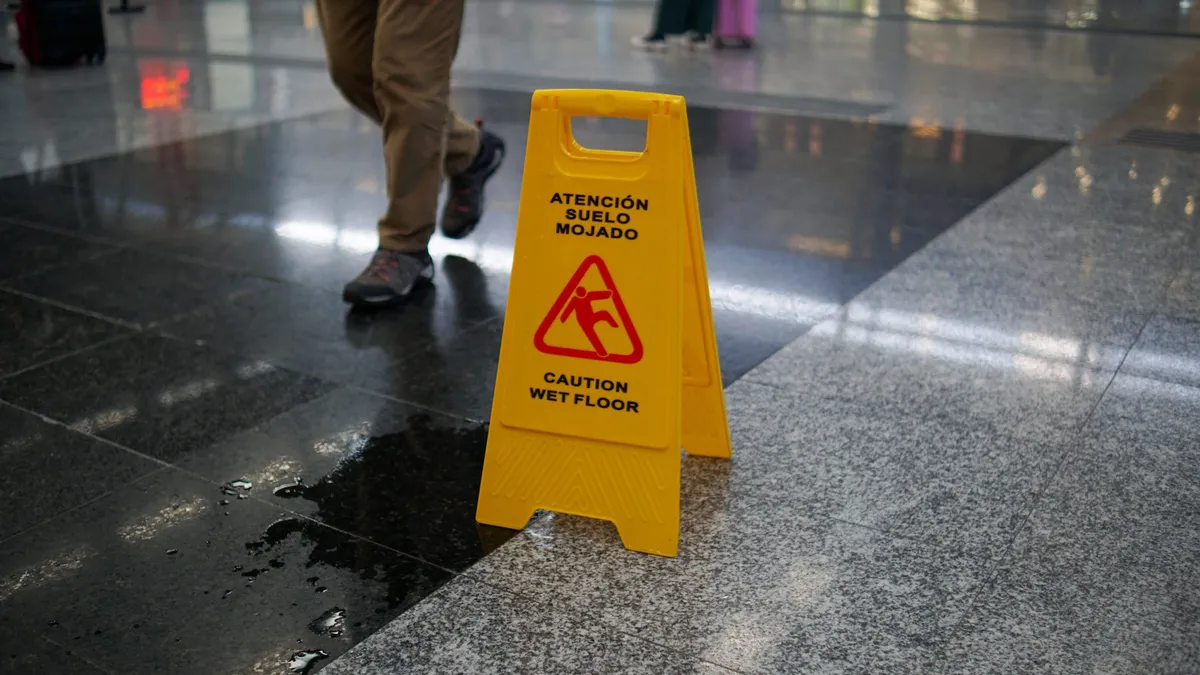
It can. A visible, properly placed warning is often enough to defeat a claim, because the owner did what the law requires: warn of the danger. A sign placed after the fall, or out of sight, does not help them.
Do I need a lawyer for a slip and fall claim?
Not for a minor injury the insurer pays promptly. For a serious injury, disputed fault, or a claim against a government body, most people do better with one. Injury lawyers usually work on a contingency fee.
Where to go from here
If you have just been hurt, photographs and the incident report matter more than anything you read today. For how compensation is reduced when fault is shared, read our guide to comparative negligence, or see how a claim turns into a lawsuit if the insurer will not settle. Arhox is an independent publication, not a law firm or insurer; our editorial policy and disclaimer explain how these guides are prepared.
This is general information, not legal advice. Rules vary by state and by situation; a licensed attorney or insurance professional can speak to yours. Read the full disclaimer.