Does Homeowners Insurance Cover a Leaking Roof? Storm Damage vs. Wear and Tear
Does home insurance cover a leaking roof? Yes if a storm or other sudden event caused it, no if the roof wore out. How insurers decide and how to prove it.
How this guide was checked
This guide was written from the sources listed below, and Atif M., Arhox's editor, is responsible for it and corrects errors readers report. A dated line-by-line check against those sources is recorded here once the editor has completed one.
Drafting is assisted by AI tools. It has not been reviewed by an attorney or a licensed insurance professional. Read our editorial standards, or report a problem.
Sources (10)
- Maryland Insurance Administrationinsurance.maryland.gov · roof replacement
- Merlin Law Group on Diep v. California FAIR Planpropertyinsurancecoveragelaw.com
- PropertyCasualty360, ISO form HO 00 03propertycasualty360.com · homeowners ho 00 03 03 22 revisions section i perils insured against analysis part 4
- Law Insider, policy excerptslawinsider.com · 1
- PropertyCasualty360propertycasualty360.com · windstorm and hail coverage
- 14VAC5-342-50law.lis.virginia.gov · section50
- Merlin Law Grouppropertyinsurancecoveragelaw.com · can my insurance company deny my claim because it didnt find a wind created opening in my roof
- Kentucky Department of Insuranceinsurance.ky.gov · KYDOI WindHailDeductAnnounce061522mn
- NAICcontent.naic.org · rebuilding after storm know difference between replacement cost and actual cash value when it comes
- Insurance Journal, on Fla. Stat. 627.7011insurancejournal.com
In this guide
It depends on why the roof leaks. If wind, hail, a falling tree or another sudden event damaged the roof and let water in, homeowners insurance generally covers the roof repair and the water damage inside, minus your deductible. If the roof leaks because it is old, worn or badly installed, the repair is not covered. The Maryland Insurance Administration puts it simply: “repairing damage due to wear and tear or deterioration of your roof over time generally will not be paid for” (Maryland Insurance Administration).
The short version:
- A leak caused by sudden storm damage is usually covered; a leak caused by age or poor maintenance is not.
- Rain damage inside the house is often covered only if wind or hail first made an opening in the roof or walls.
- A tarp is not a roof. A California court refused coverage when rain came through plastic sheeting during re-roofing (Merlin Law Group on Diep v. California FAIR Plan).
- Many policies have a separate wind and hail deductible, and older roofs may be paid at depreciated value.
- Evidence of the opening, such as missing shingles, hail bruising or a puncture, is what wins these claims.
This is general information, not insurance or legal advice. Policy wording varies by insurer and state, and your own policy decides the claim.
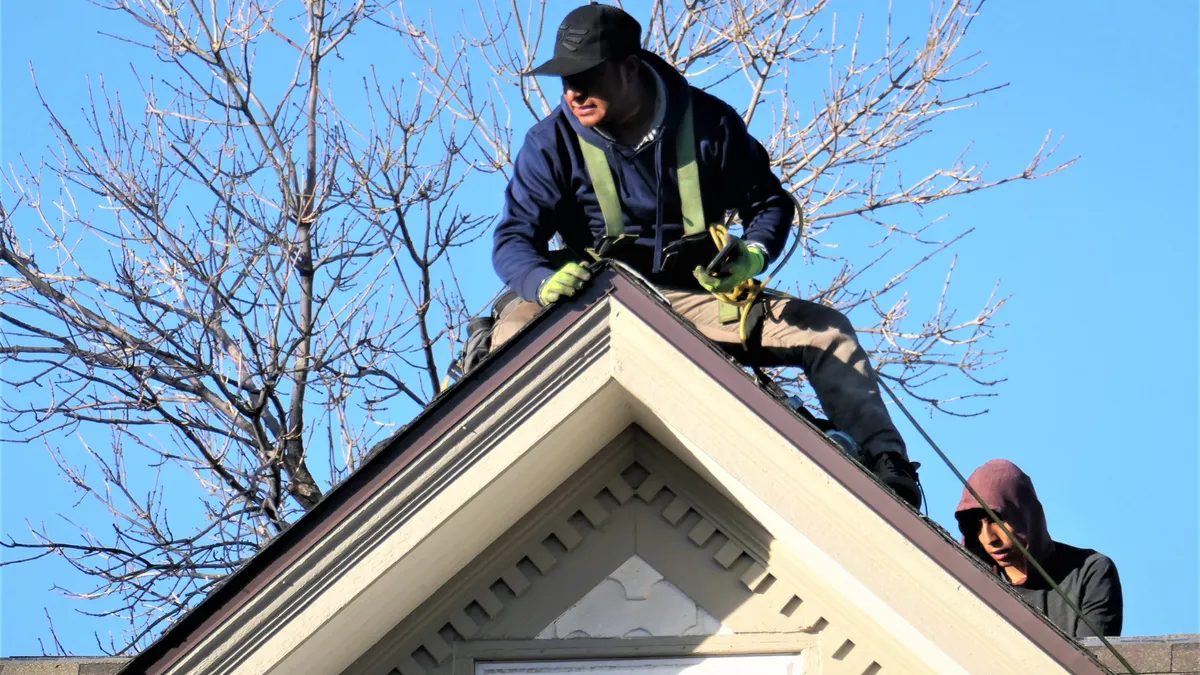
What decides coverage: the cause of the leak
Homeowners policies “typically cover losses that are sudden and accidental” (Maryland Insurance Administration). A roof is no exception. The standard ISO homeowners form, which most US insurers adapt, excludes “Wear and tear, marring, deterioration” and “Mechanical breakdown, latent defect” from coverage on the house (PropertyCasualty360, ISO form HO 00 03). Shingles that curl and crack after 20 summers, flashing that rusts through, or sealant that dries out are all deterioration.
What is covered is damage from an event: a windstorm that tears off shingles, hail that fractures them, a tree limb that punctures the deck, or the weight of ice and snow. Hail and wind are the most common of these, and our guide to hail damage roof claims explains how those payouts are calculated.
The rule about rain getting inside
This is the clause that catches most people. Policies commonly limit coverage for rain damage inside the house. A typical version says the windstorm peril “does not include loss to the property contained in a building caused by rain, snow, sleet, sand or dust unless the direct force of wind or hail damages the building causing an opening in a roof or wall” (Law Insider, policy excerpts). In the unendorsed ISO HO-3, that limit applies to your belongings, which are covered for named perils (PropertyCasualty360). Many insurers’ own forms apply a similar rule to the house too.
Some states write the opening rule into their minimum standards. Virginia’s homeowners regulation lets insurers exclude interior damage from rain, snow, sand or dust, but not where it “enters through an opening caused by the force of wind or hail” (14VAC5-342-50).
So a heavy rain that finds its way through a worn roof is usually not covered, even if the storm was severe. A storm that rips off shingles and then pours rain through the gap usually is.
Two cases that show how this plays out
The opening has to be proven, but the bar can be low. In Ortega v. Citizens Property Insurance Corp. (Fla. 3d DCA 2018), the policy excluded rain damage to the interior unless “a covered peril first damages the building causing an opening in a roof.” The trial court ruled for the insurer. The appeals court reversed, holding that the homeowner’s contractor and engineer affidavit was enough to create a factual dispute about whether a covered peril made the opening. The homeowner had introduced an “iota of evidence” (Merlin Law Group). The lesson: get a roofer or engineer to put the cause in writing.
A tarp is not a roof. In Diep v. California FAIR Plan Association (Cal. Ct. App. 1993), workers removed part of a roof during repairs and covered it with plastic sheeting. Rain came through. The policy required “actual damage to roof or walls” before interior rain damage was covered. The court held the sheeting was not a roof, and the opening had been made by the workers, not by wind (Merlin Law Group). If you are re-roofing, ask to see the roofer’s liability insurance before work starts, because that may be where a rain-during-construction claim belongs. The same article notes a different situation that may be covered: a tarp put up to protect a storm-damaged roof that later winds blow off.
What is and isn’t covered
| Situation | Roof repair covered? | Interior water damage covered? |
|---|---|---|
| Wind tears off shingles, rain pours in | Usually yes | Usually yes |
| Hail cracks shingles, leak appears weeks later | Usually yes, if hail damage is shown | Usually yes, if reported promptly |
| Tree limb punctures the roof in a storm | Usually yes | Usually yes |
| Old roof leaks in a heavy rain, no storm damage found | No | Often no |
| Flashing or sealant failed from age | No | Often no |
| Rain through a tarp during a re-roof | No | Usually no; look to the contractor’s insurance |
Sources: Maryland Insurance Administration; ISO HO 00 03 via PropertyCasualty360; Diep.
How much you get when it is covered
Three things cut the check.
The deductible. Many policies apply a separate wind and hail deductible, often a percentage of the home’s insured value. The Kentucky Department of Insurance’s example shows a 2% deductible on a home insured for $135,000 means you pay the first $2,700 (Kentucky Department of Insurance).
Depreciation. With actual cash value coverage, the insurer pays the roof’s depreciated value based on its age and condition (NAIC). Say your roof is 15 years into a 20-year life and repairs cost $12,000. On a straight-line basis, an actual cash value payment would be roughly a quarter of that before the deductible.
Partial repairs. Maryland’s regulator notes that “if only a portion of the roof is damaged, your insurance policy may cover the repair of the damaged portion only” (Maryland Insurance Administration). Whether the insurer must pay to make the new section match the old varies by state and policy.
Roof age also affects whether you can keep coverage. Florida law says an insurer “may not refuse to issue or refuse to renew” a homeowners policy on a roof “less than 15 years old solely because of the age of the roof”, and an inspection showing an older roof is in good condition can extend that (Insurance Journal, on Fla. Stat. 627.7011). Other states have no such rule, so check yours.
What to do when your roof leaks
- Stop the water inside. Move belongings, catch drips and, if safe, get a roofer to tarp the roof. Policies expect you to prevent further damage, and those costs are usually part of the claim. Keep receipts.
- Photograph the cause, not just the stain. Missing or creased shingles, hail marks on vents and gutters, the puncture, and debris on the roof. Do it before the tarp goes on if you can do so safely.
- Note the date and the weather. Write down when you first saw the leak and what storm preceded it. Local storm reports help tie the damage to an event.
- Get a written cause-of-loss opinion from a licensed roofer, or an engineer for a large claim. Ortega shows how much weight that carries.
- Report promptly. A leak left for weeks invites a wear-and-tear or neglect argument, and the water can start a mold problem with its own coverage limits.
- Be wary of door-knocking roofers. Maryland’s regulator warns homeowners to “proceed with caution when approached by roofing contractors with unsolicited offers to inspect their roof for damage”, because some misrepresent wear and tear as storm damage (Maryland Insurance Administration).
Frequently asked questions
Does insurance cover roof leaks?
Yes when a covered event, such as wind, hail or a falling tree, caused the leak. No when the roof leaked because of age, wear or poor maintenance.
Does homeowners insurance cover a leaking roof from heavy rain?
Rain alone usually is not enough. Interior damage from rain is typically covered only if wind or hail first created an opening in the roof or walls.
Will insurance pay for a new roof if mine leaks?
Only if a covered event damaged it badly enough to need replacement, and even then depreciation and deductibles can reduce the payout. A worn-out roof is a maintenance cost.
Is water damage from a roof leak covered if the roof repair isn’t?
Sometimes. Some policies pay for resulting interior damage even when the roof itself is excluded, but many deny both when the roof simply wore out. Read the exclusions and the windstorm section together.
How long do I have to report a roof leak?
Your policy sets the deadline, and most require prompt notice. Report as soon as you find the leak, because damage that worsens while you wait can be excluded.
Where to go from here
Find your wind and hail deductible and whether your roof is covered at replacement cost or actual cash value. If a storm caused the leak, the steps in our hail damage roof claim guide apply, and a tornado or windstorm brings its own deductible questions. If the insurer questions coverage, its reservation of rights letter will say why. Arhox is an independent publication, not an insurer, broker, or law firm; our editorial policy and disclaimer explain how these guides are prepared.
This is general information, not legal advice. Rules vary by state and by situation; a licensed attorney or insurance professional can speak to yours. Read the full disclaimer.